
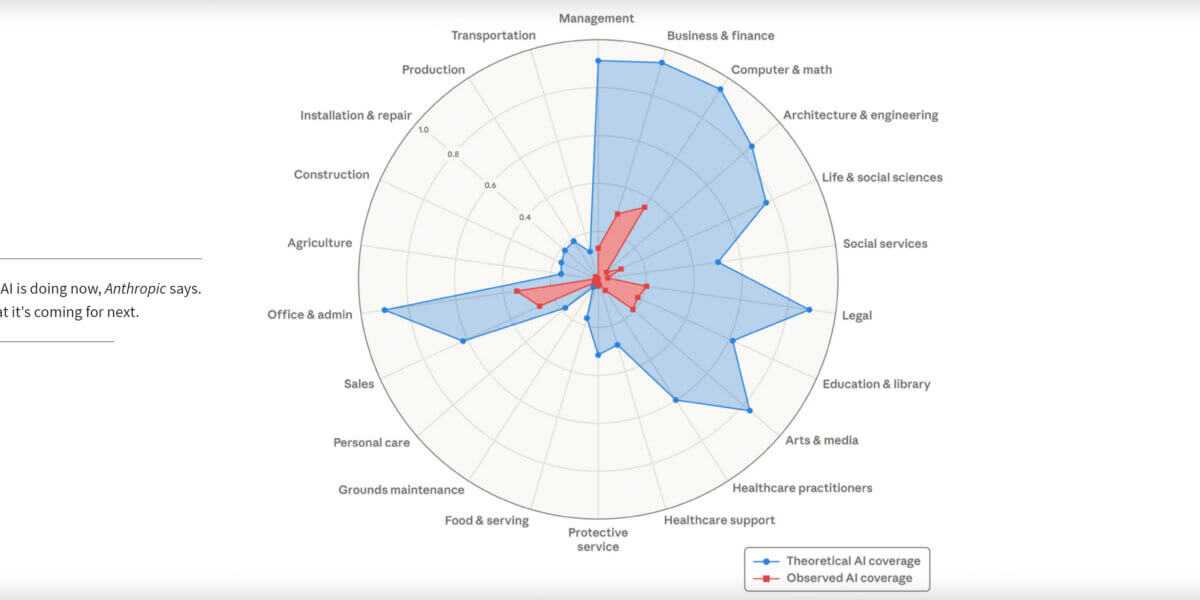
A recent report from Anthropic has made one thing clear: AI is rapidly transforming the marketing landscape, automating up to 65% of tasks traditionally handled by professionals. But while many industries are bracing for disruption, real estate faces a more nuanced reality—because when it comes to selling property, execution alone isn’t enough.
In fact, as automation rises, the importance of high-quality, human-driven marketing in real estate is becoming more critical than ever.
Imagine two properties hitting the market at the same time.
The first relies on standard tools: templated listings, generic descriptions, basic photography, and minimal branding. It’s efficient, quick, and increasingly easy to produce with AI. The second, however, tells a story. It features a distinct brand identity, a beautifully designed website, compelling brochures, cohesive signage, and messaging crafted to resonate with a specific buyer.
Both are “marketed.” Only one creates demand.
That difference—between exposure and impact—is where modern real estate marketing is being redefined.
AI can generate listing copy, analyze pricing trends, and even suggest target audiences. But it cannot walk into a property and intuitively understand what makes it emotionally compelling. It cannot craft a brand narrative that elevates a development from a collection of units into a lifestyle opportunity. And it cannot replace the strategic thinking required to position a property in a crowded and competitive market.
This is where effective marketing becomes a force multiplier.
Branding, for example, is no longer a luxury reserved for large developments. It’s a necessity. A strong brand gives a property identity, consistency, and memorability—key factors in influencing buyer perception. In a digital-first world, where buyers scroll through dozens of listings in minutes, a distinctive brand is what makes them stop.
The same applies to websites. A dedicated property website isn’t just a digital brochure—it’s an immersive experience. It allows potential buyers to explore, engage, and emotionally connect before ever setting foot on-site. When done right, it builds anticipation and confidence, shortening the path to decision-making.
Brochures and print materials, often underestimated, still play a powerful role in high-value transactions. They provide a tangible, curated representation of the property—something buyers can revisit, share, and reflect on. In many cases, they reinforce the premium nature of the offering.
And signage—frequently treated as an afterthought—is one of the most visible and immediate touchpoints. Well-designed signage doesn’t just inform; it signals quality, professionalism, and attention to detail. It shapes first impressions before a conversation even begins.
What ties all of this together is strategy.
As AI takes over the repetitive and operational aspects of marketing, the real differentiator becomes how well these elements are orchestrated. The properties that succeed will be those that combine data-driven insights with creative execution—where every touchpoint, from digital to physical, works together to tell a cohesive and compelling story.
For developers, brokers, and real estate marketers, the implication is clear: the bar is rising.
It’s no longer enough to simply “market” a property. The expectation is to position it, elevate it, and differentiate it. To move beyond listing features and into creating desire.
Because in a world where AI makes everything faster and more accessible, buyers will gravitate toward what feels considered, intentional, and human.
And that’s exactly what great marketing delivers.